Frozen
Vibe
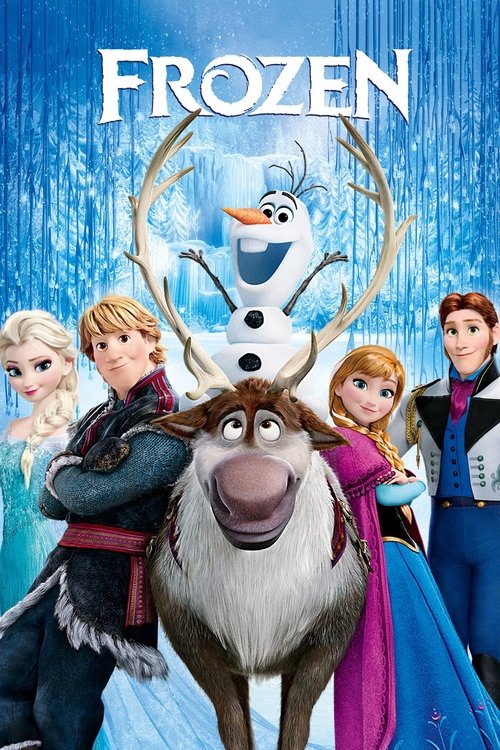
Walt Disney's phenomenon follows two royal sisters — the controlled and fearful Elsa, who possesses the power to freeze everything she touches, and the warm and impulsive Anna — whose fractured relationship sets off an eternal winter over the kingdom of Arendelle that only an act of true love can end. Directed by Chris Buck and Jennifer Lee, the film quietly subverted the studio's own romantic traditions by centering its emotional climax on a bond between sisters rather than a prince and princess, in a move that felt both surprising and inevitable. Idina Menzel's performance of Let It Go became one of the defining cultural moments of its decade, and the film's emotional argument — that fear and shame are the real forces that freeze us in place — carries genuine resonance. One of the highest-grossing animated films of all time, Frozen is both a commercially triumphant entertainment and a quietly progressive reimagining of what a Disney princess story can be about.
Watch for
- The snow and ice simulation as a technical statement of intent — the animators developed an entirely new physically based snow simulation system called Matterhorn for the film, and watch how the different textures of snow — packed, powder, crystalline, compressed — interact with characters and environments across different scenes, creating a world where the physical properties of frozen water are consistently realized.
- Let It Go as a character-animation tour de force — watch how the sequence tracks Elsa's emotional liberation through specific changes in her physical vocabulary: the release of tension in her spine, the way she stops modulating her gestures, the moment where she throws her crown away and her hair comes down, creating a three-minute arc from suppression to freedom that requires no lyric to communicate.
- The film's color design as emotional cartography — the warm ambers and reds of Arendelle's castle interiors contrasting with the cold blues and whites of Elsa's ice palace, and watch how those palettes blend in scenes where the emotional register is mixed, particularly scenes where Elsa and Anna share the same space and their respective color environments begin to negotiate.
- Hans's character design and how it was constructed to mislead — watch how his physical presentation — the warmth of his coloring, the specific arrangement of his features, his body language in the early scenes with Anna — was deliberately calibrated to be reassuring in ways that read as trustworthy on first viewing and as calculated on second, making him one of the studio's most formally constructed pieces of misdirection.
Production notes
Frozen had been in development at Disney in various forms since the 1940s — Walt himself had considered Hans Christian Andersen's 'The Snow Queen' as potential material, and the project was repeatedly attempted and abandoned over the decades. The breakthrough came when Jennifer Lee (Wreck-It Ralph) joined director Chris Buck and reconceived the antagonist Snow Queen as the protagonist's older sister Elsa — turning the story from a heroine-versus-villain plot into a story about two sisters' relationship. Lee was promoted to co-director, becoming the first woman to direct a Disney animated feature. Robert Lopez and Kristen Anderson-Lopez wrote the songs; their 'Let It Go' was reportedly the catalyst that unlocked the entire film for the team. Idina Menzel voiced Elsa, Kristen Bell played Anna, Josh Gad was Olaf, and Jonathan Groff voiced Kristoff.
Trivia
- Robert Lopez and Kristen Anderson-Lopez wrote 'Let It Go' before Elsa's character had been finalized — the song was so emotionally clear that the directors revised the entire screenplay to make Elsa the conflicted, sympathetic character the song implied she was.
- Jennifer Lee became the first woman to direct a feature film for Walt Disney Animation Studios — her promotion came mid-production, after she had been hired as screenwriter and proven essential to the story's restructuring.
- Idina Menzel had previously auditioned for Tangled; the casting team kept her audition tape and brought her back specifically for Elsa, knowing they would need a Broadway-caliber belter for 'Let It Go.'
- The animation team developed new snow simulation software for the film — the 'Matterhorn' system — that could render millions of unique snowflakes interacting with characters and environments; the technology was made available to other Disney productions afterward.
- Frozen's first weekend was modest, but it had unprecedented holiday-season legs at the box office, becoming the highest-grossing animated film of all time at that point — a record it held until Frozen II surpassed it six years later.
Legacy
Frozen grossed approximately $1.28 billion worldwide and won two Academy Awards (Best Animated Feature, Best Original Song for 'Let It Go') — at the time, the highest-grossing animated film of all time. Its cultural footprint may exceed any other Disney animated feature of the 21st century. 'Let It Go' became one of the most-streamed and most-covered songs of its era in over 40 languages. The film generated a 2019 sequel that also crossed $1 billion, multiple short films and television specials, a Broadway musical, theme park lands ('Frozen Ever After' at Epcot, the entire World of Frozen at Hong Kong Disneyland), and a permanent place in childhood iconography for an entire generation. Elsa joined the Disney Princess line as one of its few queens. Jennifer Lee became the first woman to direct a Disney Animation feature, breaking a 76-year ceiling. The film's emphasis on sisterly love over romantic resolution reset the template for Disney heroine narratives, and was inducted into the National Film Registry in 2024.