Zootopia 2
Vibe
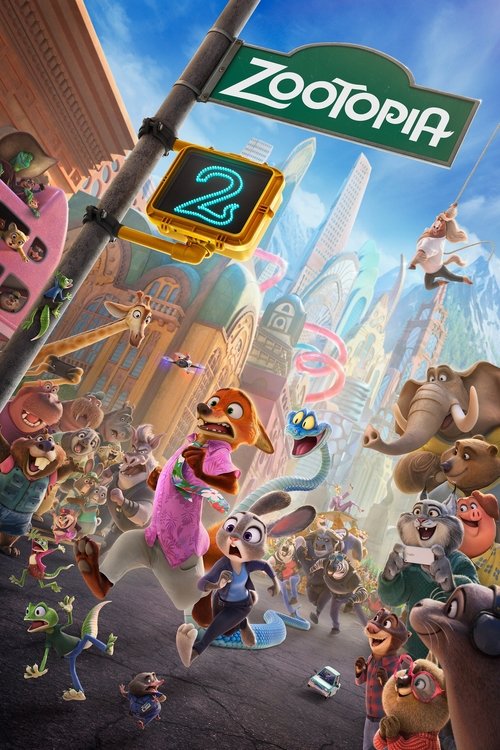
Walt Disney's long-awaited sequel returns to the sprawling mammal metropolis for a new case that again pairs the resourceful Officer Judy Hopps and the irreverent Nick Wilde — this time navigating an investigation that reaches into Zootopia's criminal underworld and tests the civic progress the city has made since their first adventure. Directed by Byron Howard, the film deepens the social world of the original while continuing to use the animal city as a lens for examining how bias, power, and fear shape institutions and communities over time. The central partnership between Judy and Nick remains the film's greatest asset — their dynamic now sharpened by shared history and the comfortable trust of genuine equals. As a story about how hard-won progress can be undermined from within, and the vigilance required to protect what a community has built together, Zootopia 2 proves that the ideas animating the first film are as worth returning to as the characters who brought them to life.
Watch for
- The city's expanded visual geography and how new districts are integrated — watch how the design team extends Zootopia's five-borough logic into new environments that maintain the original's internal design rules while introducing species and climate combinations that the first film's scope didn't reach.
- Judy and Nick's physical dynamic as partners of established equality — watch how the animators differentiate this dynamic from their first-film relationship through specific changes in staging: they occupy the same spatial plane more frequently, their physical orientation toward each other is more symmetrical, and the constant small adjustments of a new partnership have been replaced by the easy spatial fluency of shared history.
- The criminal underworld's visual design as a deliberate contrast to Zootopia's civic architecture — watch how the spaces the investigation moves through use a different lighting register, a different spatial organization, and a different density of signage and environmental detail that creates a visual grammar of the city's shadow economy distinct from its official surface.
- The new animal characters' physical design as extensions of the film's allegorical system — watch how each new species is designed not just as an animal but as a visual argument about the social position they occupy within Zootopia's structure, with physical characteristics that encode their narrative function in ways that reward attention to the specificity of each design choice.
Production notes
Zootopia 2 reunited co-directors Jared Bush and Byron Howard from the original film. Bush had become Walt Disney Animation Studios' Chief Creative Officer in 2023 (succeeding Jennifer Lee), and Zootopia 2 became his first directing credit since assuming that role. The sequel introduces new districts of Zootopia — Marsh Market and other long-mentioned but unseen areas — and brings reptiles into the previously mammal-only city, opening up the world's metaphorical scope to address questions about who counts as a citizen. Yvett Merino produced. Ginnifer Goodwin and Jason Bateman returned as Judy and Nick; new principal cast included Ke Huy Quan as the snake Gary De'Snake, Quinta Brunson, Fortune Feimster, and Macaulay Culkin. Shakira returned as Gazelle and contributed the original song 'Zoo.' Michael Giacchino returned as composer, having scored the original. Production budget was approximately $150 million.
Trivia
- Zootopia 2 became the highest-grossing Hollywood animated film of all time, surpassing Pixar's Inside Out 2; it grossed over $1.85 billion worldwide and was the fastest PG-rated film ever to reach $1 billion, doing so in just 17 days.
- Ke Huy Quan, fresh off his Oscar win for Everything Everywhere All at Once (2022), made his Disney Animation Studios voice acting debut as the pit viper Gary De'Snake — Quan had returned to acting only a few years earlier after a long career hiatus.
- The film expands Zootopia's metaphorical reach by introducing reptiles to the previously mammal-only city, allowing the story to engage with themes of who is included in social citizenship and who is excluded — building on the original film's themes about prejudice and group identity.
- Macaulay Culkin's casting in Zootopia 2 marked a notable return to studio voice work for the actor, who had not been a major Hollywood presence in animated features for many years.
- Zootopia 2 surpassed Avengers: Endgame to become the highest-grossing MPA-rated theatrical release ever in China — a particularly notable achievement given the increasingly competitive Chinese animation market and the success of homegrown films like Ne Zha 2.
Legacy
Zootopia 2 is, as of its release, the most commercially successful animated film in Hollywood history — over $1.85 billion worldwide, surpassing Inside Out 2 and Frozen 2 — and the fastest PG-rated film ever to reach $1 billion, doing so in just 17 days. Critical reception (around 91% on Rotten Tomatoes) confirmed it as one of Disney Animation Studios' strongest sequels. The film's thematic engagement with gentrification, exclusion, and who-belongs-where extended the original's anti-prejudice themes into more specifically urban-political territory by introducing reptiles into the previously mammal-only city. Its success has fundamentally reshaped Disney's animated-feature strategy: the studio's pipeline through the late 2020s prioritizes sequels to proven IPs (Frozen 3, Tangled 2, and others) on the strength of the Moana 2 / Zootopia 2 model. Judy Hopps and Nick Wilde have become some of Disney Animation's most commercially valuable contemporary characters. Zootopia 2 surpassed Avengers: Endgame to become the highest-grossing MPA-rated theatrical release ever in China — and as the 64th film in the official Disney animated canon, it caps a century of studio history with the franchise's strongest commercial showing.